
Filler Material
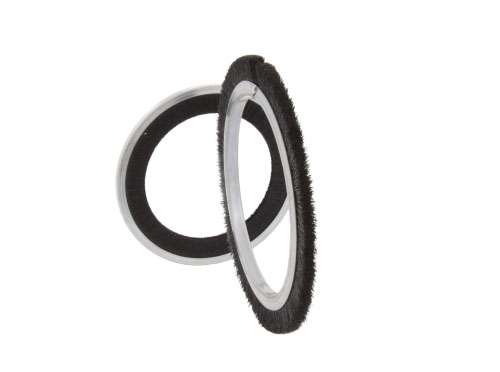
Filler Material Characteristics
1. Synthetics
| Polypropylene | Nylon | Polyester | |||
| 6 | 6.6 | 6.12 | |||
| Stiffness Modulus Dry (PSI) x 1000* |
745 | 375 | 512 | 450 | 450 |
| Stiffness Modulus Wet (PSI) x 1000* |
700 | 140 | 160 | 400 | 420 |
| Water Absorption** | 0.03% | 10% | 9% | 3% | 0.33% |
| Bend Recovery | 75% | 90% | 90% | 90% | 90% |
| Softening Point (°F) | 240° | 300° | 300° | 300° | 300° |
*Stiffness modulus based on: dry 50% Humidity, Wet 100% Humidity
**Water absorption from total immersion at room temperature
Most synthetic material color is black or natural (milky white). The characteristics of the material remain the same regardless of the material color.
2. Custom Materials
Conductive Synthetics, High Heat Synthetics, Mixes of Synthetics/Wire/Natural Fibers, Various Colors & Crimps.
3. Wire
Can be very aggressive, withstands heat, available in Oil Tempered Steel, Stainless Steel, Phosphor Bronze & Brass.
4. Natural Fibers
Horsehair, Tampico, Bassine and Union Mixes all offer unique properties.
All of the above except natural fibers are available in level or crimped.
- Level: filaments are straight.

- Crimped: Filaments have a series of waves in each filament.

For detailed chemical resistance ratings, click here.
Contact us for additional specific chemical and solvent resistance, along with performance expectations of these filler materials. Samples are available upon request.